

J.P. Andrew explains the Euthyphro Dilemma for Divine Command Theory:
1. Either: (a) God has reasons for what he commands, or (b) he does not.
2. If (a), then God’s reasons (not God’s commands, per DCT) determine what is morally required.
3. If (b), then God’s commands (and thus the moral facts) are arbitrary.
Therefore,
4. Either morality is independent of God’s will (i.e., DCT is false), or the facts of morality are arbitrary.
He then responds:
The force of the dilemma depends on a crucial assumption — namely, that if God has reasons for commanding what he does, then those reasons must be external to God… On classical theism, God necessarily exists with a perfectly good nature, and his commands will flow from that nature… This response preserves DCT while avoiding the arbitrariness concern.
I’ve always found this response puzzling. For one thing, I don’t see that any of premises 1 - 3 depend on the claimed “crucial assumption”. So it’s unclear how appeal to God’s nature actually engages with the Euthyphro dilemma as stated.
Since J.P. grants that God has reasons, I guess he must intend to undermine premise 2? But even if God’s commands “flow from [his perfectly good] nature”, it still seems true that a moral requirement to do X is better explained by the reasons why a good God would command X than by the mere command itself. (Notably, the explanatory hypothetical does not require a good God to actually exist. If you agree there are objective facts about what a good God would prefer or command, that would seem to suffice to establish objective morality.)
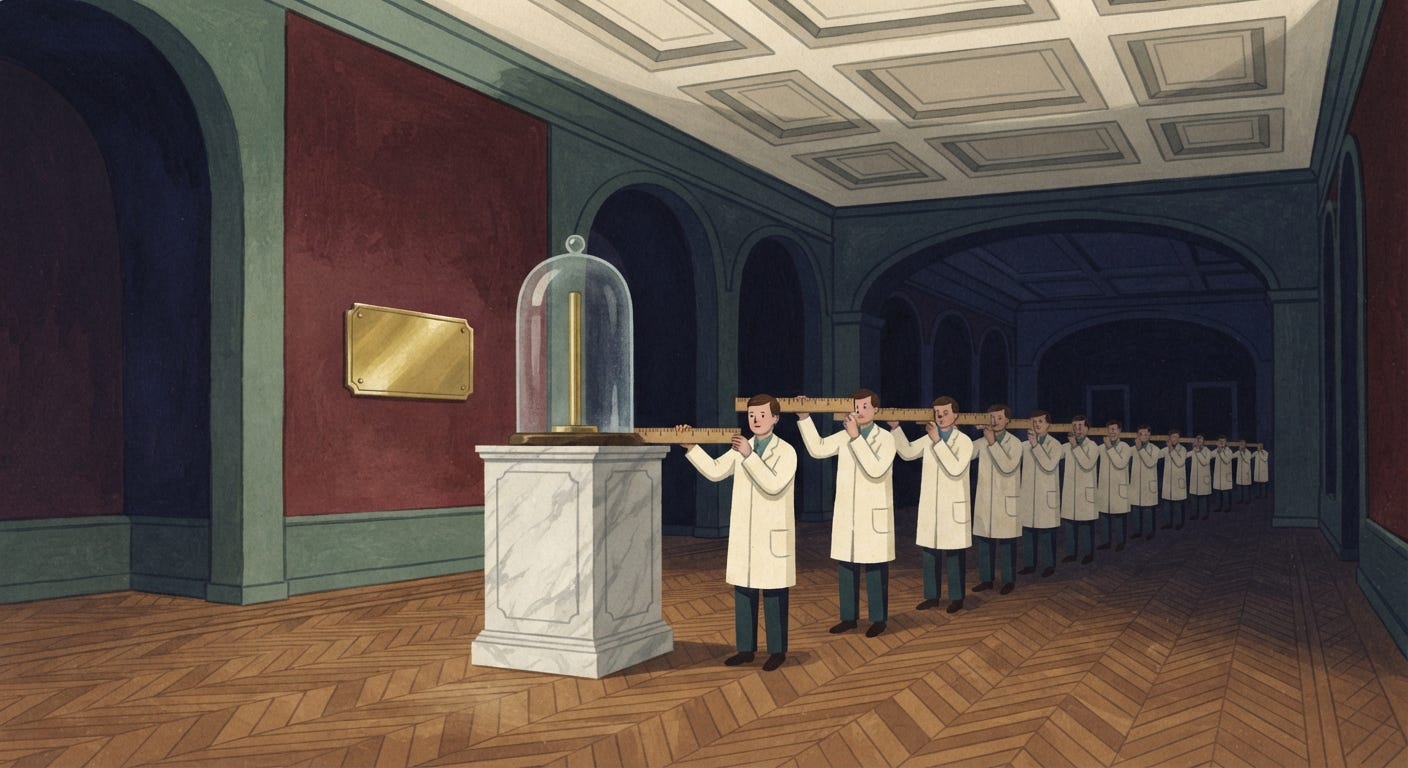
Many theists want to claim that God grounds morality, such that there could be no morality without God. If they appeal to God’s nature rather than his commands to do the grounding work, the Euthyphro dilemma can be reapplied to this new target: Either God’s nature matches a standard of goodness that we can grasp independently of any commitment to theism, or God’s essential nature, whatever that turns out to be, provides the substantive content of “goodness”. But the latter renders the attribution vacuous: for all we know a priori, God’s nature / moral perfection might consist in delighting in suffering. (Compare: the standard meter stick could be any length whatsoever, and we’d call that length ‘one meter’ as a result. A priori, attributing a length of one meter to the stick shares no information beyond that it is as long as itself. There’s no epistemic substance to the attribution: it rules out no conceivable scenarios.) If calling God good is supposed to mean something more than calling him self-identical, we need an independent normative property to attribute to him.1
Even if you take two terms to co-refer, if they differ in cognitive significance (like Clark Kent and Superman) there must be distinct properties (like being a reporter and being a superhero) associated with each term to explain the cognitive difference.
The problem is that metaethical reductionists—whether naturalists or supernaturalists—don’t appear to have any eligible properties available to explain the cognitive significance of moral attributions. No non-normative property could provide the cognitive significance of “good” without prematurely closing and trivializing what should be open, substantive questions. That’s the substantive question argument in a nutshell,2 and it seems just as devastating to theistic as to naturalist metaethical reductionism.
So I think theists would do best to embrace the view that moral truths, like other philosophical truths, are what they are independently of God’s will or nature. That way, when you say that God is necessarily good, your claim actually means something.
Might the divine command theorist insist that these epistemic and semantic challenges are irrelevant to their metaphysical claim? I think that would be difficult to sustain. Sure, we can distinguish metaphysical questions from epistemic and semantic ones. But our answers to one may constrain what we can say about the others (see my introduction to 2-D semantics for details). In particular, we need to posit enough distinct properties to provide content to the full range of distinct concepts that we have. (“Primary intensions” play this role in 2-D semantics.)
See also the Normative Property Dualism Argument.
Very sensible post. I've recently had a similar but kind of reversed question about classical theism (which I've been exposed to a lot at Notre Dame and the Catholic-dominated programs I've been at over the past few years). Since classical theism has it that God and the good are identical, and I believe in the good (I'm a moral realist), it seems at least possible that classical theism should have it that I'm already a theist, and only sort of mistakenly take myself to be an agnostic.
I say or suggest the same thing here:
4. God’s Character
Some respond that an all-good, all-loving being like God would not or could not command such an action.[10] But that is likely to again reject DCT in favor of thinking that some actions are just wrong, pretty much no matter what: that’s why God could not or would not command them.[11]
Some deeper questions: why would God have a loving character rather than a “hating” character? Why would a loving being command some actions and not others? Again:
either there are reasons or not.[12]
If there are no reasons, then God’s being loving is arbitrary—God could have had an evil character. To many, this isn’t plausible.
But if there are reasons, is it because it is just good to be loving—perhaps because being loving promotes happiness, respect, and fairness? If so, then some things are good and bad, or right and wrong independently of God’s commands: so DCT is false.
https://1000wordphilosophy.com/2025/11/22/divine-command-theory/