

John Quiggin is not a fan of contemporary utilitarianism, and he blames Sidgwick. I think he’s right that Sidgwick has had significant influence (especially via Parfit); but I think more by introducing previously-unasked questions than by turning away from any clearly contrary commitments in Bentham and Mill. As I explained in Puzzles for Everyone, people often make the mistake of thinking that neglecting a puzzling problem puts one in a philosophically better position (since it allows one to refrain from committing to any particular set of costs), but when every complete and precise view has significant costs, we should appreciate that a noncommittal disjunction of costly commitments cannot be better than its least-costly disjunct. My sense is that a mistake along these lines—not appreciating the costs of the alternatives—may underlie Quiggin’s objections to Sidgwick’s views.
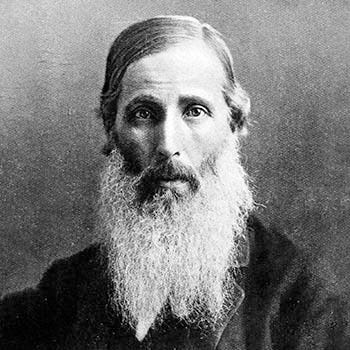
Let’s consider the three objections in turn.
Valuing potential lives
The classical utilitarians argued for public policies which promoted the welfare of the community to which they applied, on the basis of “each to count for one, and none for more than one”. This applied both to the current population and to the children who would actually be born as a result of their choices, but not to hypothetical additional people who might raise the sum of total utility.
By contrast, contemporary utilitarian philosophy yields bizarre spectacles like “longtermism” which implies that our primary goal should be to produce as many descendants as possible provided that the result is an increase in aggregate utility.
Firstly, that’s not an accurate statement of longtermism (which is more ecumenical than the total view of population ethics). But more to the point, it seems anachronistic to read Bentham and Mill as excluding “additional people” from counting, as opposed to simply failing to consider the relevant question. It’s hard to imagine them approving of voluntary human extinction, for example, even if the final generation got a slight utility boost from increased material consumption. Such a narrow focus on guaranteed existents fits ill with Mill’s deep concern for “the permanent interests of man as a progressive being,” for example.
Quiggin quotes Sidgwick as urging total over average utilitarianism. I find it strange to call this an “error” when the average view is subject to far more decisive counterexamples. Quiggin’s dismissal of “hypothetical additional people” suggests that he may personally prefer a person-affecting view (since even average utilitarianism implies prioritizing bringing about additional lives of above-average welfare), but this too is subject to extremely powerful objections.
The dispute ultimately comes down to whether you value people (and their getting to live good lives) conditionally or unconditionally. When you see a happy child, should you merely feel glad that they’re happy (rather than unhappy), while being coldly indifferent to whether they exist at all? Or should we rather recognize that it’s a good thing that they exist? I think the latter. But then temporal consistency suggests that, even before they were born or conceived, it would be good for them to get to exist (all else equal). And likewise for others who don’t yet exist, but could.
If you don’t welcome such good lives, there’s an important sense in which you deny them unconditional value. You value human lives less robustly. I think the robust humanism that warmly welcomes all good lives (apart from any negative externalities) is much more morally admirable than the thin, conditional humanism of those who regard potential good lives with cold indifference.1
Guiding individuals
Quiggin continues:
This is far from the only problem with contemporary utilitarian philosophy. It’s commonly presented as a theory of individual ethics, saying that our actions ought to be those which promote the maximal happiness of everyone affected, giving ourselves the same weight as everyone else. Apart from being impossibly demanding, this prescription seems perfectly designed to produce absurd counterexamples (trolley problems, organ kidnapping etc). As far as I can tell, the original idea of utilitarianism as a public philosophy is sustained only by a handful of philosophers, most notably Bob Goodin.
I agree with Goodin that utilitarianism is especially compelling as a guide to public policy. (Indeed, as I’ve previously argued, the standard “agent-relative” interpretation of deontology renders it incoherent to endorse as a public ethic. We can’t generally want others to act on merely agent-relative reasons. If we had reason to want that, their reasons would be agent-neutral: shared by all.) But it hardly follows from this that it’s a bad idea for individuals to do more good rather than less. (Note that any non-consequentialist view has to grapple with deliberately preferring a worse future over a better one.)
It’s especially puzzling to suggest that the “original idea of utilitarianism” somehow excluded itself from guiding individual actions. Mill famously wrote, “actions”—not just policies!—“are right in proportion as they tend to promote happiness, wrong as they tend to produce the reverse of happiness.” Sidgwick opted for a more explicitly maximizing frame, with talk of “produc[ing] the greatest amount of happiness on the whole.” I find the maximizing frame too easily misleading, but Sidgwick at least did specify that in speaking of what is “right” or what we “ought” to do, he simply means what we have most reason to do—that is, he’s picking out a moral ideal, not the bare minimum for social acceptability. And it should hardly be surprising that ideal actions may be “impossibly demanding”!
For more on why demandingness is not a serious objection, see ‘Imperfection is OK!’ and the utilitarianism.net article on the demandingness objection.
On “absurd counterexamples”, see the rights objection and my posts on deontic ambiguity and ethically alien thought experiments, which argue that the “counterintuitive” appearances here are largely illusory, and rather stem from people doing philosophy badly (choosing obviously distorting examples, failing to clearly distinguish normative concepts of ideal vs non-ideal guidance, etc.).2 Note also that moral intuitions track virtue signals; one must be careful in how one relies on them.
Actual and Expected Value
Quiggin’s third objection:
Yet another problem is the claim that what matters is the actual outcome of an action, rather than the reasonably expected outcome. The early utilitarians all focused on the general tendency of outcomes, rather than specific outcomes, and this has been formalised by economists with expected utility theory and its various generalisations (my own special subfield of decision theory). But the idea that actual outcomes should be the criterion is promoted by a significant contemporary group (admittedly, a minority).
I’m not sure what the problem is supposed to be with “the claim that what matters is the actual outcome of an action”—I don’t imagine that he seriously means to deny that it matters what actually happens.
As Quiggin quotes Sidgwick [update: he has since removed this quote, as a commenter was unable to find it in Sidgwick’s writings]:
It would seem, however, that the ultimate standard of rightness must be the amount of good actually produced, not the amount which was expected to be produced; though we may admit that, in estimating the consequences of actions, we are generally obliged to be guided by the probabilities of different results.
As I interpret this, Sidgwick the quote is just saying—correctly!—that we should care primarily about the actual outcomes (that is, you should desire that people’s lives actually go well, not just that they go well in expectation—the latter being compatible with actual misery), while being guided by probabilities.
I don’t really think there’s any deeper issue to debate here. As I wrote on utilitarianism.net:
When there is a conflict in this way between which act would be actually best versus which would be expectably best, is there a fact of the matter as to which act is “really” right? Many philosophers are drawn to the view that this is a merely verbal dispute. We can talk about the actually-best option as being “objectively right”, and the expectably-best option as “subjectively right”, and each of these concepts might have a legitimate theoretical role. For example, subjective rightness seems more apt to guide agents, since in real life we are often uncertain what consequences will actually result from our actions. Subjective rightness is also relevant to assessing the quality of an agent’s decision-making. (We think poorly of the reckless doctor, for example.) But we should presumably prefer that the actually-best outcome be realized, and so will be glad that the doctor did as they “objectively ought”, even if they acted subjectively wrongly. Objective rightness thus tracks what a fully informed, morally ideal spectator would want you to do.
On this understanding, objective and expectational utilitarianism aren’t truly rival views at all. Objective utilitarianism tells us which choices are objectively preferable, and expectational utilitarianism tells us how to make rational moral decisions under conditions of uncertainty. Their respective claims are mutually compatible.
See also my ‘What’s at Stake in the Objective/Subjective Wrongness Debate?’. (As this post highlights, the debate is not specific to utilitarianism.)
What’s the upshot?
Quiggin concludes:
Superficially, it might seem that modern social welfare theory has taken Sidgwick’s formal approach and given it a mathematical expression. The standard workhorse of this model, the social welfare function, is an aggregate of individual welfare measures, with properties that ensure that the higher the value of the function the better the outcome. But this function is invariably applied in ways that reject Sidgwick’s errors. First, it is used to evaluate public policy, typically in the context of models that do not assume individuals act as disinterest utilitarian ethicists. Second, it is applied to specific fixed populations. Where comparisons are made between populations, they are almost invariably presented in average rather than aggregate terms. And where uncertainty is relevant in evaluating policy, the focus is on expectations over large numbers of cases, not on the actual outcomes in specific cases.
If Quiggin’s ultimate concern is just to defend standard practices in “modern social welfare theory”, then I don’t think he has to worry. On the first and third points, at least, an accurate understanding of Sidgwick does not in fact threaten those practices. Neither Sidgwick nor any other proponent of utilitarianism as an ethical theory assumes that individuals routinely “act as disinterest[ed] utilitarian ethicists”—we are aware that people (ourselves included!) routinely fail to do what would be morally ideal (and policy needs to take this into account). And Quiggin already quoted Sidgwick as granting that we need to be “guided by probabilities” in the face of uncertainty, so the final quoted sentence seems awfully straw-mannish.
On population policy, there’s a real dispute to be had. See my two-part review of After the Spike: Why Depopulation Matters and A Human Abundance Agenda. I hope the dispute may proceed by way of reasoned arguments rather than just asserting that the opposing view is an “error” and mischaracterizing its implications. I hope we can collectively bring about a better future, and an important first step is to collectively get clear on what makes different possible futures better or worse. If I currently have a mistaken view on that question, I’d welcome discovery of a better view.
Of course, I don’t expect these brief remarks to settle the debate. I just mean to highlight the overlooked costs of Quiggin’s view. By contrast, I’ve never seen any good reason to deny that good lives have unconditional value that makes them desirable to realize, all else equal. (Affirming this value does not by itself entail the repugnant conclusion, and denying it does nothing to resolve the more fundamental question of how to deal with quantity-quality tradeoffs, which reapply within a life.) In the absence of any serious case for the opposing view, the dialectic frankly seems about as rationally lopsided as debates in ethics ever get. I currently view serious debate in population ethics as being between versions of the total view, variable value, and critical range theories—none of which regard potential wonderful lives with indifference.
It may also be worth mentioning that the “Trolley Problem” is technically a problem for deontologists, i.e. to distinguish what makes killing one to save five OK in some cases but not others. The utilitarian answer is uniquely straightforward and sensible: it’s OK just when it doesn’t risk worse consequences that in expectation outweigh the immediate good done.
Bentham and Mill did (briefly and obliquely) touch on some issues in population ethics. Johan Gustafsson gives some examples in footnote 2 here: https://drive.google.com/file/d/1H8eOd-ML94Fnj3JnEeZEIYq-j9w76I1P/view?usp=drivesdk. He guesses that Bentham would have leaned totalist and that Mill would have leaned averagist.
Very well said. I thought this was a convincing reply with lots of useful references.