

Philosophy has more open letter drama, this time condemning MIT professor Alex Byrne for contributing to an “HHS report on pediatric trans care.” The letter raises two procedural complaints:
(1) Requisite Expertise
They accuse Byrne of violating “professional standards” by contributing to a report on which (they allege) he lacks expertise:
While you are a highly regarded philosopher of mind and have recently written on the philosophy of gender, you are not a medical ethicist by training.
This is ridiculous gatekeeping. Have you looked at what “medical ethics training” gets you? I’d take a clear-headed analytic philosopher over a “medical ethicist by training” any day. (Of course, the “clear-headed” part is the bit that really matters. As was pointed out to me in the Q&A when I last presented on this—to a room of friendly bioethicists—plenty of philosophers have uncritical, vibes-based views on bioethical questions too!)
Being largely unfamiliar with it, I can’t venture any opinion on Byrne or his work. But his critics need to do that, rather than rely on a blanket principle that philosophers who aren’t explicitly trained in applied ethics should never contribute to public policy. For that would be a terrible principle. I think we should (clearly!) welcome more philosophical input on questions of public policy, because philosophers are especially skilled at the disambiguation and clarification of easily-confused ideas. As Byrne responds:
Philosophers prize clear language and love unravelling muddled arguments, and the writings of pediatric gender specialists serve up plenty of obscurity and confusion.
(2) Collaboration causes cooties
Next, the open letter details a number of respects in which the Trump administration is (truly and deeply) appalling. But they then add:
We believe it is deeply myopic for any academic to collaborate with the Trump administration in this moment… it is simply unconscionable to… make common cause with an administration so engaged.
This also seems clearly false. Suppose that, while DOGE was eviscerating USAID, they had asked (say) Peter Singer to help them prioritize which programs to cut. And suppose that, by collaborating with this process, Singer could have convinced them to preserve PEPFAR (far and away the most important and effective USAID program). This would have saved perhaps half a million lives (assuming the funding is not otherwise restored). Not all policies are as high-stakes as that one. But government policies are a big deal. It’s just crazy to suggest that academics shouldn’t try to improve the policies of the United States government because they’d catch cooties from sharing documents with Trumpists.
When does it make sense to boycott policy-making?
In general, I think we should have a strong default prior that it’s good for academics to try to improve public policy. The stakes are high, and academics have distinctive expertise that (we may hope) make their efforts more likely to do good than harm. That doesn’t change just because the government is evil.
Of course, we should be trying to make the policies morally better, which may diverge from the goals of the administration. One shouldn’t collaborate towards evil ends, such that one’s contribution makes things even worse than they’d otherwise be. But the open letter doesn’t argue that Byrne has done any such thing. (That would require arguing against the substance of the report he helped produce,1 and furthermore arguing that the team would have produced a better report without his input. The latter seems especially implausible, given what we know of the Trump administration’s ideological commitments.) They just seem to be making an argument from cooties.
Now, there’s one context in which having academics boycott the government makes sense, and that’s if their taking such a staunch collective oppositional stance would (somehow) achieve more good, such as by forcing the government to reform in salutary ways. But academics have no such power over the U.S. government, especially one whose power base is as hostile to academia as Trump’s is. If anything, taking such a partisan professional stand, qua academics collectively, just seems likely to make things worse. I can’t imagine what concrete benefit the objectors anticipate resulting from their proposed intellectual boycott. (I suspect they’re sacrificing individuals for symbolism again.)
The real effect: silencing junior academics
As Byrne writes in his reply:
What is the point of this open letter? There are no action items. You write that you are “not here calling for official or unofficial sanctions,” but why not? If an MIT faculty member committed a serious violation of “professional academic ethics,” I would demand an investigation. The MIT Provost’s Office is the place to start.
One effect of such letters is to send a clear message to other academics who may be contemplating their own investigations into pediatric gender medicine or other controversial topics. Unless you are confident in advance that you will agree with us, do so at your peril. Only a brave—or foolhardy—untenured faculty member, let alone a graduate student, would take that risk.
I think this is exactly right, whether or not the letter-writers intend it. One could imagine a different social context in which the letter merely discouraged others from “collaborating” with disapproved-of administrations (which, as noted above, seems bad enough). But given the history of “cancel culture” in academia, I think it would be overly optimistic to assume that open letters of this sort don’t contribute to broader chilling effects.
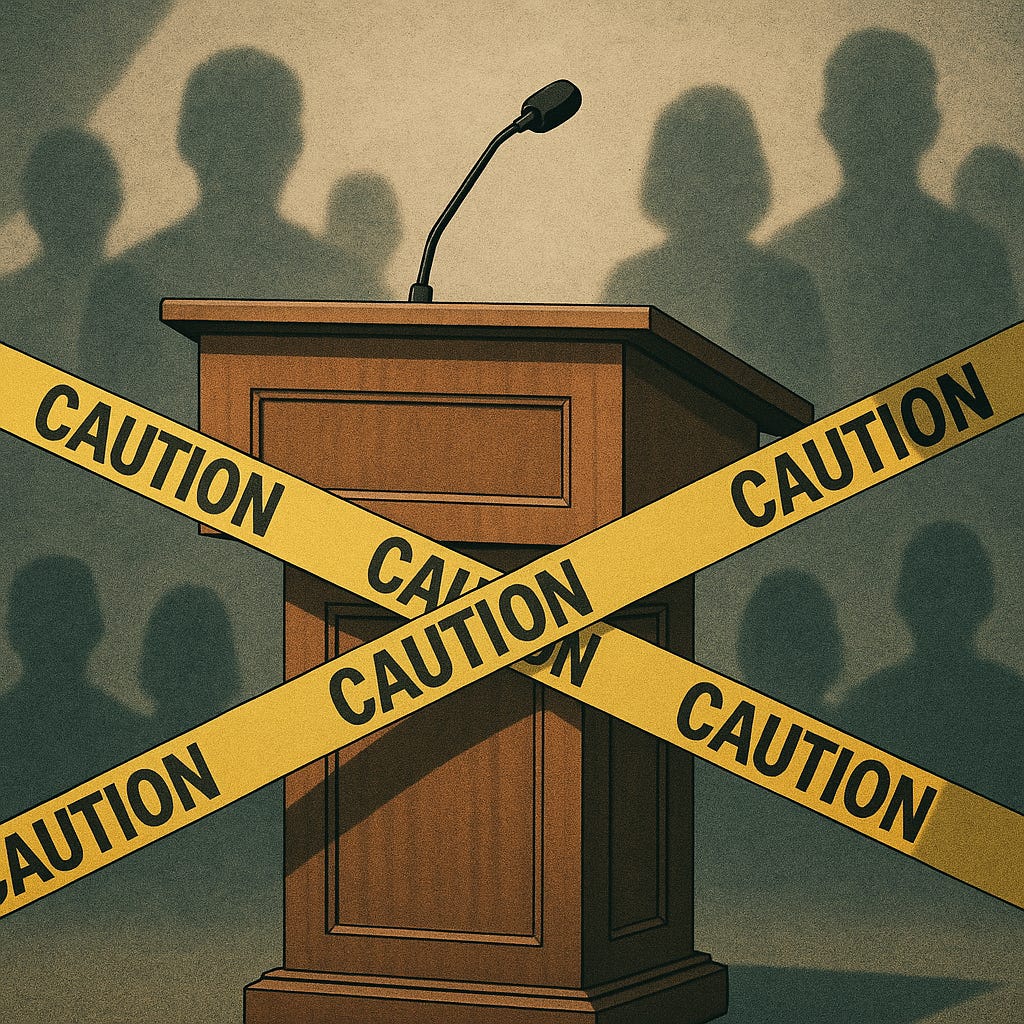
For what it’s worth, I’m committed to supporting my junior colleagues and grad students across the profession as they argue for whatever they sincerely believe—even awful doctrines like anti-natalism!—and I hope more of my senior colleagues will speak up to say the same.
For an example of what it looks like to argue on the substance that an academic has behaved irresponsibly, see my criticisms of Stanford professor Leif Wenar’s WIRED diatribe against effective giving. (Though I still wouldn’t sign an open letter condemning him. I’m not convinced that mobbing collective condemnations of academic colleagues for their good-faith contributions to the public sphere, however horrifically misguided, are ever advisable. Mobs have too much of a tendency towards conformist stupidity and disproportionate punishment for my liking.)
Barging in an unrelated field and explaining why it is confused and everybody in it is wrong is the /point/ of philosophy. Like, what do these people think our job even is?
Completely agree. The way to settle these disputes with unfriendly scholars is to show that their arguments fail or that their work is poor in some other way.